KOI-4878.01
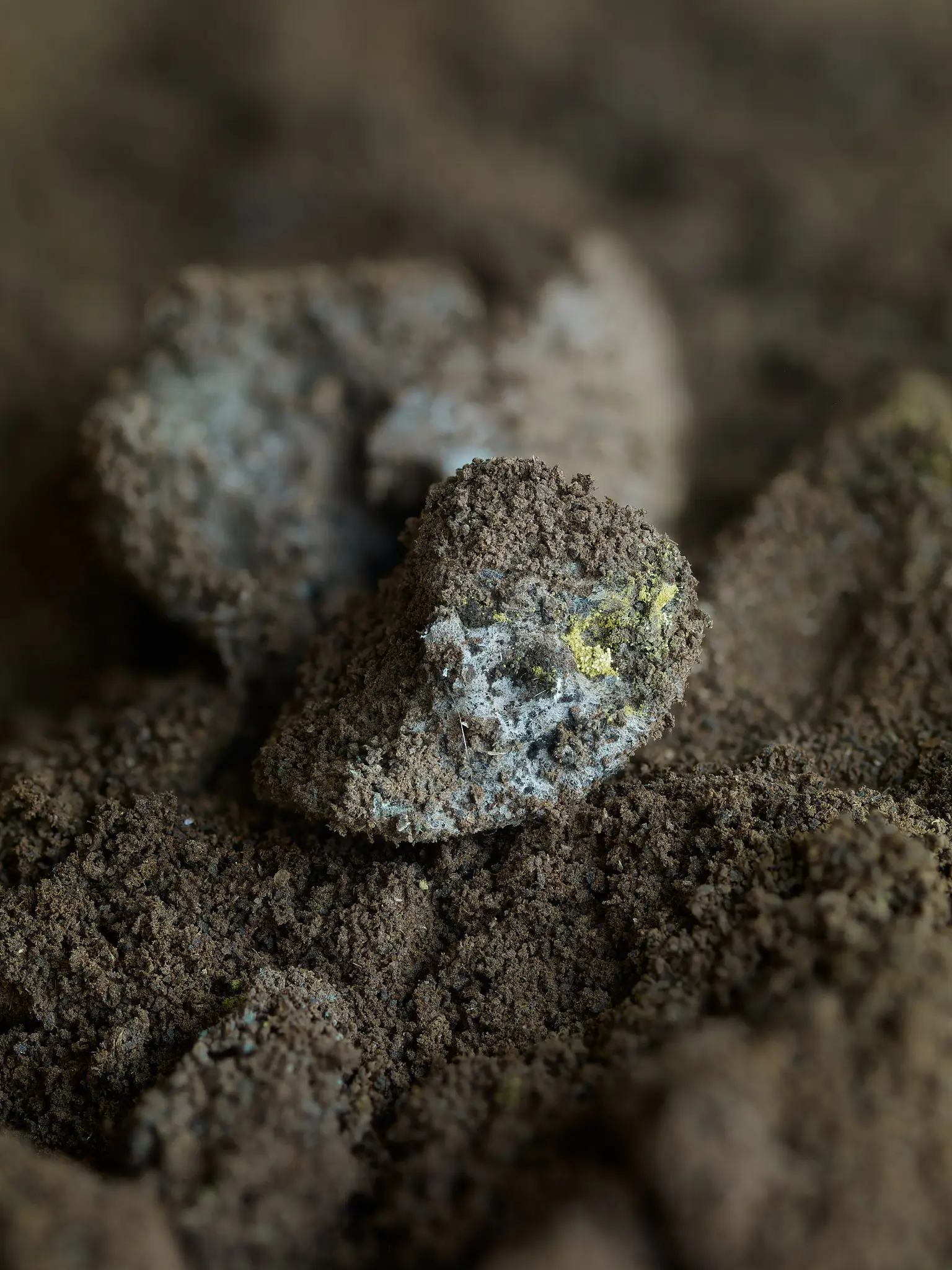
Whenever I brew a cup of coffee, I keep the coffee grounds. There is no particular reason for this. One day I saw a snowflake-like white thing covering the pile of grounds. At a closer look, it was mold. Though it does not seem to be, mold is a living organism with cell walls, much like a plant. The difference is that it cannot produce nutrients of its own.
It occurs to me that there must be mold somewhere else in the universe too. On some small planet like Earth, a small life living off another organism. And someone who might find that small thing — someone to whom it would matter to turn a warm eye on a tiny being in an enormous universe.
Record of the Sanitation Officer, Ark KOI-4878.01
The voyage went smoothly. Or so I thought.
The hibernation pod opened, and the first thing to swim into my blurred vision was an old man’s hand. Strangely, it felt as though it were my own. Aftereffects of the long sleep, or was I still dreaming? As I tried to pry open my eyes — gummed shut, unwilling — I felt a wrinkled hand against sagging skin. It was my hand.
The clock was broken. That was the problem. Interstellar travel had been around a long time, but once the corporations finished running the numbers and concluded there was nothing out in deep space worth salvaging, they stopped investing in navigation technology, and the field sat still for a very long time. And a voyage of this distance had never been attempted before. Something I learned during maintenance work: nearly half the development budget had in fact gone to advertising the “Second Earth.” At any rate, the clock wired into the central computer slipped, just slightly, and the errors began to accumulate. This affected the hibernation management program, and most of the crew were left for a long time in a state of incomplete stasis. Because I had to wake at intervals, I seem to have been lucky enough to escape the failure. Or were they the lucky ones? The time we knew is useless now, and I have no idea when this is, how much of it has passed, whether I woke when I was meant to. I only know a day has gone by because I watch this place’s sun rise and set.
This planet, some 1,075 light-years from Earth, is called KOI-4878.01. Its diameter is about 1.05 times Earth’s, it has blue oceans as Earth does, and it circles its sun once every 449 days. People revered this planet that so resembled Earth, and called it the Second Earth. No one had ever seen it, but everyone shouted its name, praised it, called it the hope of humankind. Of course, it wasn’t all hopeful talk. There were those who said we had to prepare for war with the natives who might already be there. Environmentalists who said we had no right to make a Second Earth. Doomsayers who said we should accept nature’s judgment. And those who simply didn’t like their taxes being spent on a future they would be dead for. And still, toward that place — the messiah of our age — we sailed.
Fortunately, the Second Earth had no owner. More than that, there seems to be nothing here alive enough to interact with a human being. I haven’t seen so much as an animal. There is only barren land, the sea, and one white-haired old man who happened to survive.
The first few weeks I was badly sick. Maybe it was some virus of this planet’s, but every last doctor had croaked, so how would I know. I was grateful just to be walking on two legs. Thanks to the drop in headcount there was enough food to last me a lifetime, so starving to death wasn’t a worry either. There was no longer any need to clean the enormous ark. Among all that advanced equipment, the only things of use to me were the primitive tools. A suitably shaped piece of iron fixed to a stick — the sort of tool that has been with us since the birth of the species and that no one has ever thought important. A shovel, for instance.
After I had buried the crew, something white on the end of the shovel caught my eye. Smaller than the nail of my little finger, so small it amazed me I had noticed it at all. Mold. A white thing putting down roots into a scrap of red soil. It was mold, no question.